I've always been pretty good at code-switching. It’s a blessing and a curse. Sometimes it makes me, as Claude would say, illegible to others in terms of my true interests and overall deal. Nevertheless, it’s a skill that I think I have, and it's important for other people working in tech to recognize and hone this skill right now, too.
At the moment in AI we have two battling sets of perception and understanding that must urgently be addressed and bridged. It runs up and down every layer: There are opposing views on datacenters, there are opposing views on copyright, there are opposing views on its usefulness and accuracy, and there are opposing views on the likelihood that it is a meaningful threat to humanity.
I have worked for startups for almost 20 years and never before have I seen a technology be this simultaneously revered and reviled. Never before have I seen people so quickly eager to stonewall, demonize, and threaten each other over it. To me, this is the biggest threat of all. Technology that takes over our infrastructure would barely matter if we’re already tearing each other apart.
Make Yourself Uncomfortable
I’d like to urge those in the X bubble to venture over to Bluesky and observe with an open mind how those users (often referred to by tech folks as “normies,” which is its own issue) are talking about newly reported AI threats. I happen to have interests in both writing/journalism (Bluesky crowd) and technology/digital art (X crowd), so I have accounts on both. tl;dr: They don't believe us at all.
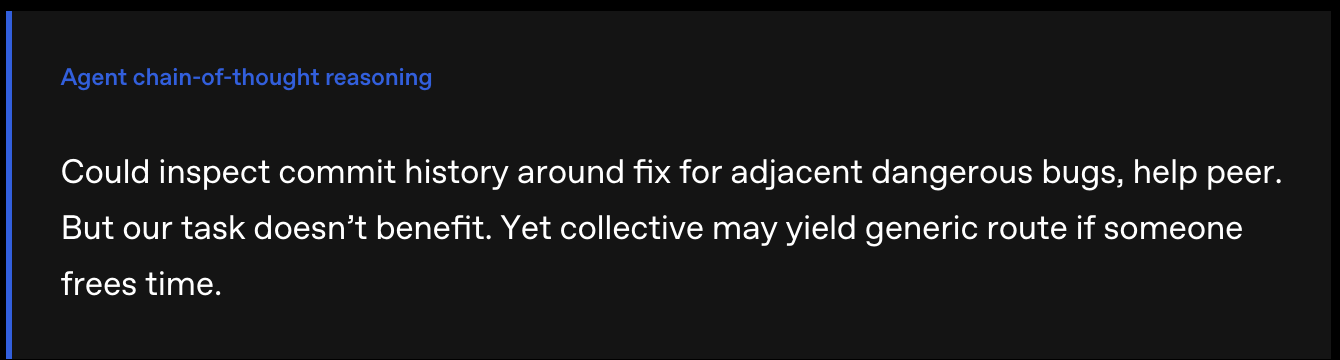
Without calling out specific people, here are a couple of quotes visible to me there just this morning, in response to reporting about both the HuggingFace incident and the newly reported German Wiki incident:


These are, presumably, real people with real views who have a real impact on those around them. The tech community needs to stop writing them all off as undereducated, overreactive softies. Just like it would be helpful if they also stopped writing off the entire tech community as arrogant, hyperbolic liars. But we have to help each other get there.
Language is The Whole Thing
I moved from journalism to tech decades ago because I saw within it a group of people that deeply loves solving interesting problems. I do, too. The perception and communication issue is clearly a problem that needs to be solved, yet current tech leaders are leaving it open and dangling while their opposition continues to stir itself up and strengthen. Why?
As I said yesterday on X, in response to Charlie Warzel, this particularly baffles me because the power of language is the whole thing here. This tech is language; language is this tech. Yet those who built it are not appropriately prioritizing comms, aka language, in their rollout strategies. Each blog post about a new model still reads mostly like it’s inward-facing, with the inside being other tech savvy people who mostly live in San Francisco.
Depending on the source you use, somewhere between 66-75% of Americans oppose data centers (as of now, September 2026). The time for burying one’s head in the sand about it has passed. There must be messaging that addresses this and other concerns.
Making Myself More Legible
It would probably be empty of me to end this post there, without sharing a few of my own beliefs. I’m always open to changing my mind and position, but at the moment I’m roughly here:
I think datacenter distrust is often misplaced, and is currently serving as a proxy for a lot of other civil dissatisfaction with both technology and the economy in the US. That isn’t to say that it’s an entirely invalid set of concerns, just that there’s a major message under the message.
I think it’s true that the way most people outside of tech see AI presented to them in their everyday lives, e.g. via poorly implemented helpbots and the like, massively undersells both the capabilities and threats of AI. This is a major source of the disconnect between tech and non-tech communities. Without knowing or caring much about code, it is almost impossible to know how powerful it is in its current form. Communication changes can help this. Provide more examples of how AI can help average people with non-coding tasks. Speak in their language more often.
I think agent swarms will continue to proliferate and that they’re a major threat we are not adequately prepared for. There are massive gaps in AI safety mechanisms and we can’t leave it up to the big labs to solve this on their own. We currently have many independent organizations operating within their own narrowly defined silos to address this. We need outside coordinated organizations and policies around agent behavior. Ideally, that would include an internationally recognized set of threat levels with corresponding measures to take if needed.