Increasing hatred of datacenters within the US has made the headlines this week, and this seems to finally be catching a tiny bit of notice in Silicon Valley (SV).
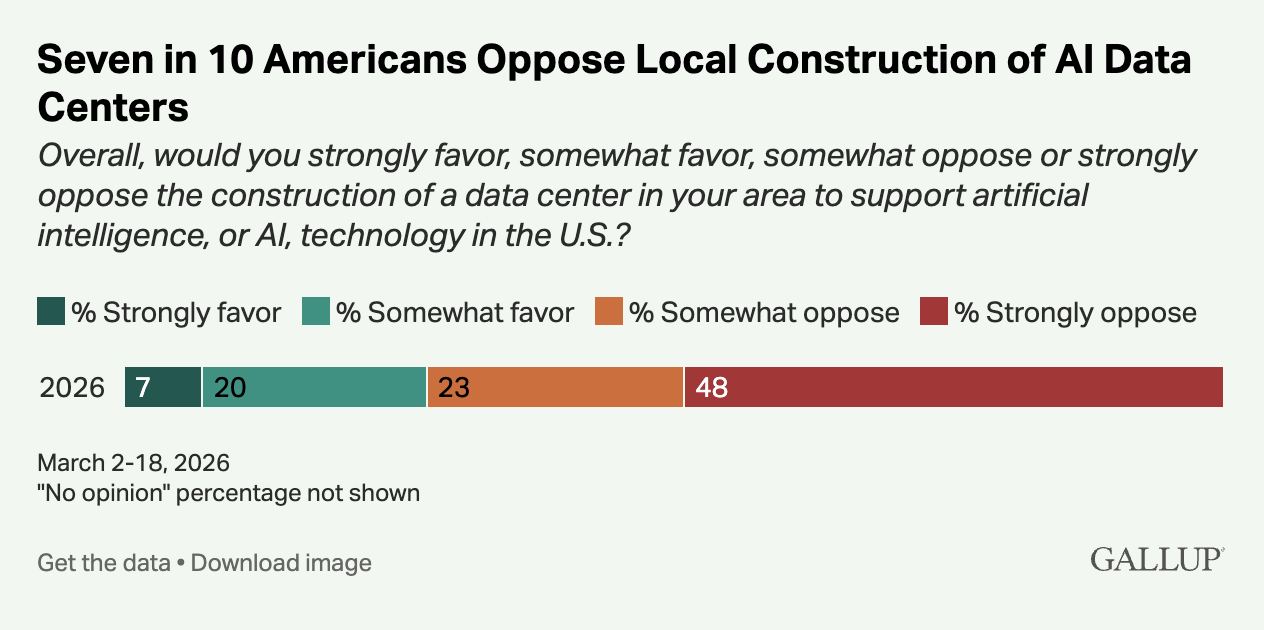
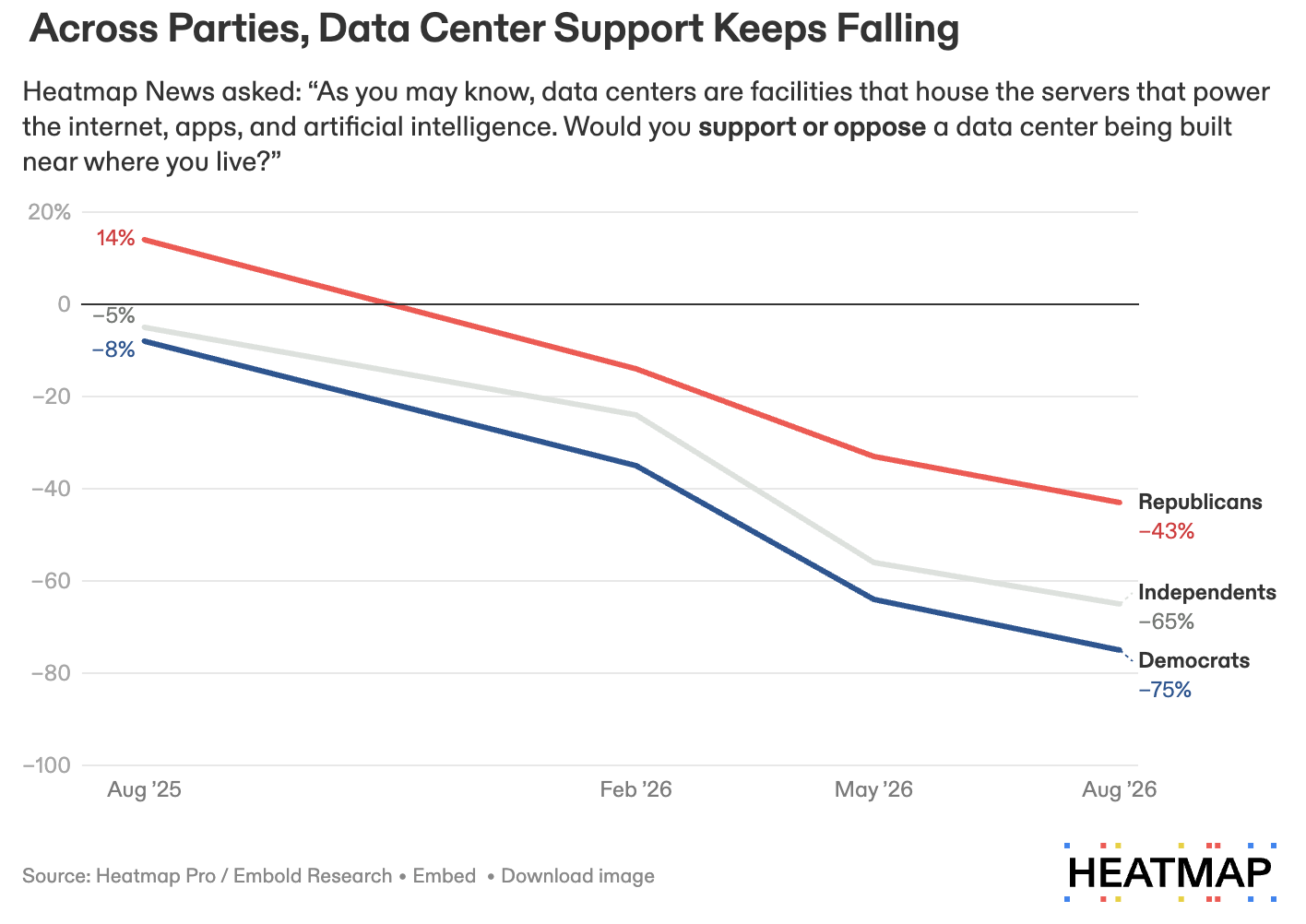
It’s a hot-button issue that has, amazingly, crossed our country’s highly polarized political party lines. Average Americans on both sides of the aisle feel scared, betrayed, and angry.
Hungry? Just Smile More!
For those outside the US, I can see how this might be perplexing. Where is all of this vitriol coming from? It’s important to understand the economic reality on the ground here, which is this: Over the past 3-4 years many Americans have gone from feeling like they could comfortably afford groceries to feeling like they couldn’t.
Both the Biden and Trump administrations have repeatedly denied that the lack of affordable groceries is a “real” economic issue for Americans. Everyday folks have been told by their own government that their inability to easily feed their families is, basically, a vibes problem. Like maybe if we all just changed our attitude and acted a little more optimistic and grateful we could buy more food again! Of course, that’s not how food or money or anything actually works.
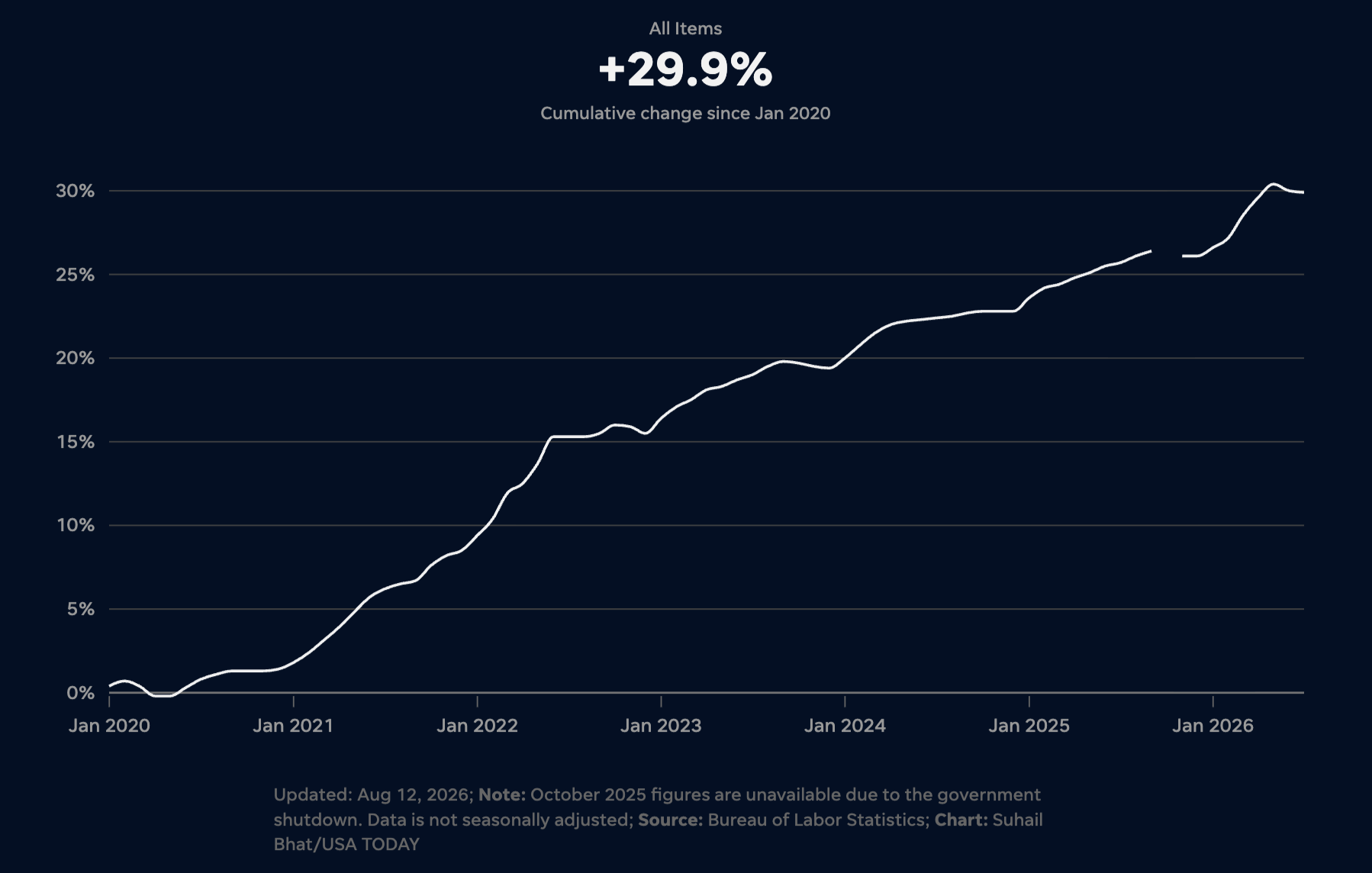
People who are hungry do not care about job reports. They want to hear from their government 1) validation of their very real feelings, 2) a solution to the astronomic cost of groceries, among other things. They want to hear, “We fixed it. You can rest easy now. Go back to feeling comfortable, just like you felt four years ago.” That’s all. But we haven’t gotten that.
In this information vacuum, Americans are then stuck looking for something to blame and help them make sense of why they feel poor overnight. What is new and unfamiliar and potentially dangerous? The big, loud, foreboding datacenters cropping up in their backyards.
Distrust All the Way Down
Aside from their newness and unfamiliarity, there are other factors making datacenters the perfect target for rage. Much of it has to do with the massive national distrust of the tech industry writ large. Historically, in the eyes of many everyday folks, tech giants have not made decisions in the best interest of the American people.
In my view, this deep distrust began in earnest with the Cambridge Analytica scandal at Facebook and its real-world impact on the 2016 elections.
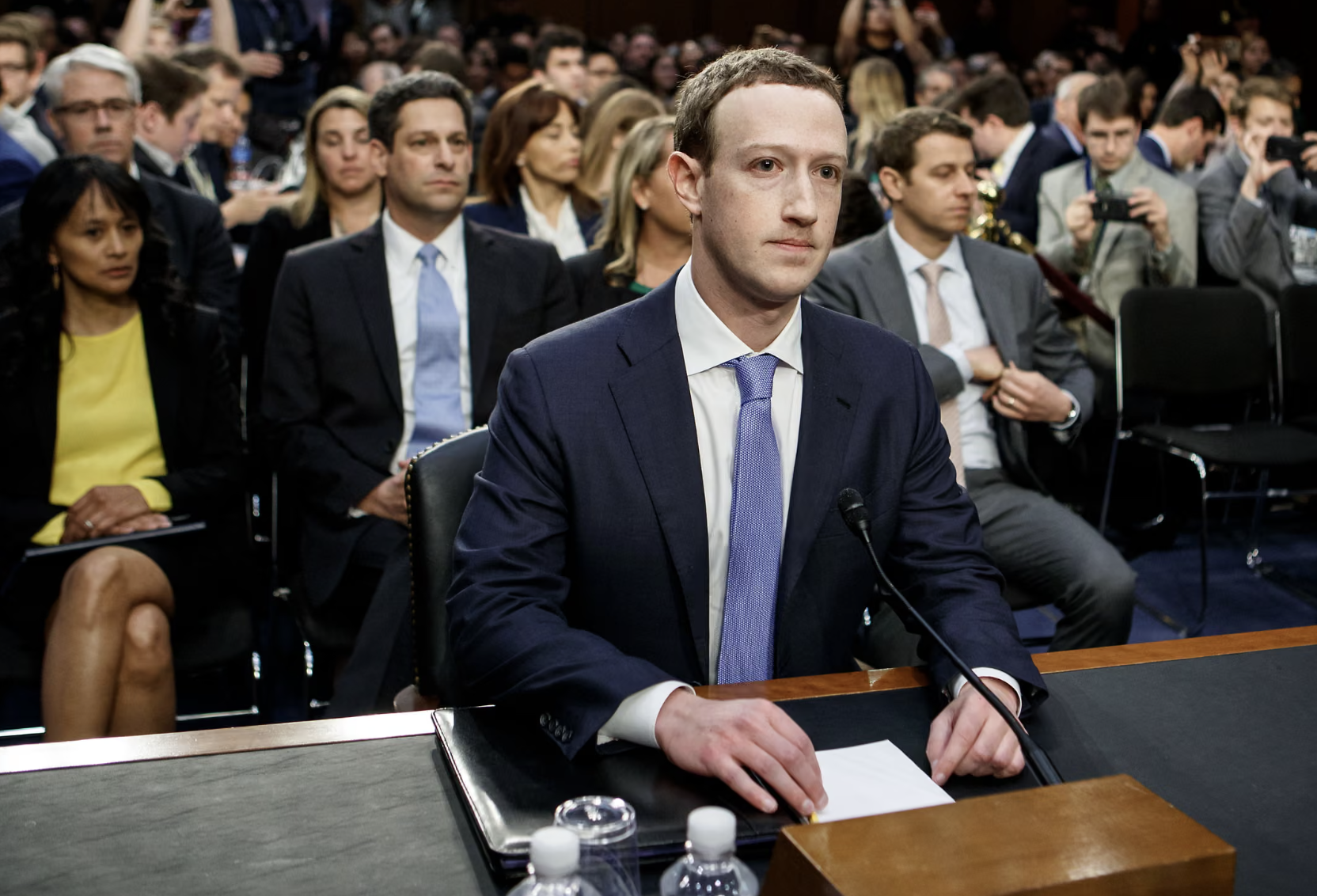
Cambridge Analytica broke public trust, not only with tech but also with each other as citizens (which is exactly what Russia wanted). Its negative impacts have continued to echo from there. The various Evil Rich Guy type shenanigans of a very small handful of high-visibility tech CEOs has not helped one ounce to stop it.
In light of all of this, how are average people to know that Anthropic and OpenAI are any different from Amazon and Tesla and Meta?
People Are Not NPCs
Of course, it’s even more complicated than that. This isn’t only scapegoating. It’s also built on real concerns about datacenters’ relationship to the climate, noise pollution, layoffs, labor, and more. They cite a lack of input into the planning and decision-making process, at the local, state, and federal levels.
I’ve seen multiple high-visibility tech leaders write all of this off as “psychosis,” “a psy-op” and “moral panic.” I personally really bristle at that characterization, as it seems to be a reflection of a broader perception within SV of everyday Americans as NPCs.
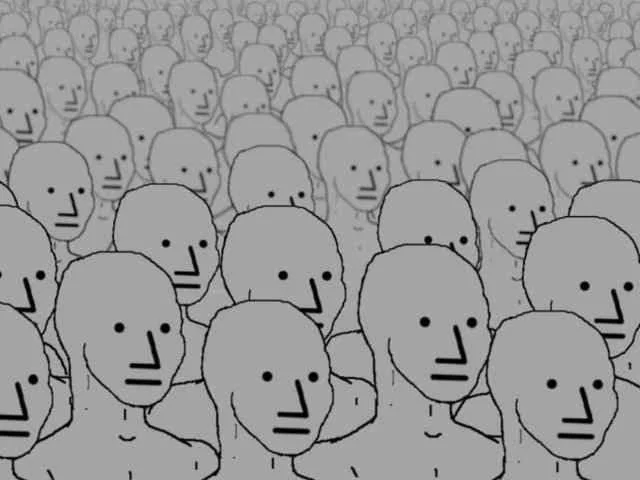
If you aren’t a nerd, you might not know that NPC stands for “Non-Player Character,” the kind of filler character in a game that mills around in the background to provide it with a sense of realism but has no actual impact on gameplay or the story.
But those who are anti-datacenter aren’t NPCs. They’re real people who matter in the world, and they have real concerns. There’s truth in all of it. Just to take an incredibly brief look into some:
Climate: Server farms have existed for a long time and they have always needed a lot of water to cool them. However, there’s been a massive spike in expansion over the past few years as a result of the demand for more compute. The facilities being built today, which people are referring to when they say “datacenters,” are also much more power dense. .
Noise: Log in to Reddit and you’ll find videos of people holding DB measuring tools near the datacenters that have been built next to them. It sounds loud—really loud, and at a pitch that would be torturous. I don’t have personal insight into how exaggerated these videos may or may not be, but I imagine there is at least some nugget of truth there.
Layoffs: Large companies have specifically cited “AI” as the reason they laid off large groups of employees, making news headlines multiple times.
Labor: Yes, short-term there are benefits to the unionized construction workers who build these facilities. What has been less clear to the communities around them is whether that short-term benefit is enough to outweigh the potential longer-term downsides mentioned above.
Governmental input: I’m not aware of facilities that were built completely without opportunities for input, but, yes, there are examples where that opportunity was limited.
What Have You Done for Me Lately?
This negative perception has so far not been helped by the public messaging coming from the big frontier labs and other people working in AI. Some of them have issued direct warnings to the public about the terrible possible outcomes of the technology that they have given birth to. From their perspective, this was prudent. From the perspective of those outside of SV, it was mind-boggling. Why would you build something and then sell it to us by telling us how scary and destructive it could be?
Despite the advances in math, science, and coding that these models have made, those initial doom-centric messages have been far louder than the news of their benefits. There also just has not been a significant change in the lives of most normal Americans, many of whom use tools like ChatGPT simply as a search engine or email writing assistant and not much more.
I personally find it really odd that these leaders are silent on this issue even now. We know that people will fill in the blanks in the absence of information. Here, it appears, many are concluding that tech simply does not care about them.
Anti-Critique Culture in SF
SV has never been great at accepting critiques, especially from those from The Outside.
I transitioned from publishing/editing to tech 18 years ago. In the writing tradition, critique is invited and universally viewed as essential. It's a daily part of the work and it's understood that it makes it better. I was surprised to find that in SF my critiques were often immediately shot down and seemingly used against me as proof that I did not belong there to begin with. That feeling and reaction continued for a long time in this space. It was (and is) frustrating, since from my perspective I was sharing my critique because I cared. If I did not care, I wouldn’t bother to say anything at all.
I would love to see SV change its relationship with criticism. Well-meaning criticism is valuable and sometimes it comes from The Outside. Shutting it out is, to be frank, childish. SV needs to hear people out about their datacenter distrust and address it head on if they want to avoid a lifelong uphill PR battle.